Est. circa 1752 · Easton, Massachusetts

Harmony Hall A home with many lives

For nearly three centuries, this building on the banks of Old Pond has served as a furnace shed, a schoolhouse, a library, a music hall, a women's club, and a private residence.

At 8R Poquanticut Avenue, on the edge of Old Pond in what was once called Furnace Village, a single building has served as an iron furnace shed, a schoolhouse, a lending library, a brass band hall, a women’s club, a Legion post, and a private home, all since about 1752.

8R Poquanticut Avenue · North Easton, MA 02356

Aerial view of Old Pond at golden hour, the pond stretching through the trees with warm evening light
Old Pond at sunset, created in 1752 by damming Poquanticut Brook to power the furnace
1752

The Charcoal Shed

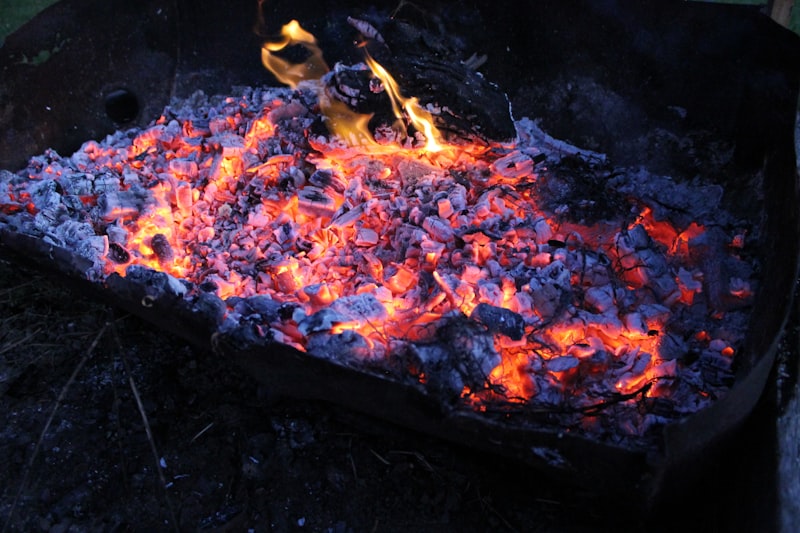
Glowing embers in a forge
A charcoal furnace required vast quantities of fuel, stored in sheds like Harmony Hall

Long before the first European settlers arrived, the Wampanoag people knew this land: its streams, its wildlife, its iron-rich soil. The very name Poquanticut is Wampanoag, meaning “at the clear or shallow stream”, referring to the brook that later powered the iron furnace. Local tradition also links the name to the Poquanticut Indians of Rhode Island who travelled here to hunt the abundant wildlife of the cedar swamps and high ledges. Beneath the surface, the swampy lowlands held rich deposits of bog iron that stained the earth and water a rusty red ore that nine men would extract to supply their iron furnace, established in 1751.

“Poquanticut: ‘at the clear or shallow stream.’”

Dr. Frank Waabu O’Brien, Understanding Indian Place Names in Southern New England (2010), via Easton Historical Society Newsletter (Fall 2015)

On December 13th, 1751, nine men (John and Daniel Williams, Matthew Hayward, Josiah Keith Jr., Timothy Williams, Josiah Churchill, Benjamin Williams, Jabez Churchill, and James Godfrey) pooled their shares and founded an iron furnace corporation on the banks of a small brook they called Little Brook. John and Daniel Williams each held a quarter share; the rest held an eighth or a sixteenth apiece. The next year they dammed the stream, creating what we now know as Old Pond, and the enterprise that would define this corner of Easton for generations had begun.

Iron smelting devours fuel. Mountains of hardwood had to be slowly burned into charcoal before a single casting could be poured, and that charcoal needed a dry place to wait. The building that would one day be called Harmony Hall likely began its life right here, as a charcoal shed, or perhaps as part of the smelting furnace complex itself, standing close enough to taste the smoke. A 1776 deed for the property references a “coal house, warehouse, and cabin furnace” and members of the Belcher ironworking family later confirmed the building's use as charcoal storage. The brickwork at its south end looks old enough to date from the furnace's earliest years.

“May have been built as a charcoal shed or part of the original smelting furnace.”

Easton Historical Society, Furnace Village (1993)
9
Founding Partners
1752
Old Pond Created
1776

Forged in
Revolution

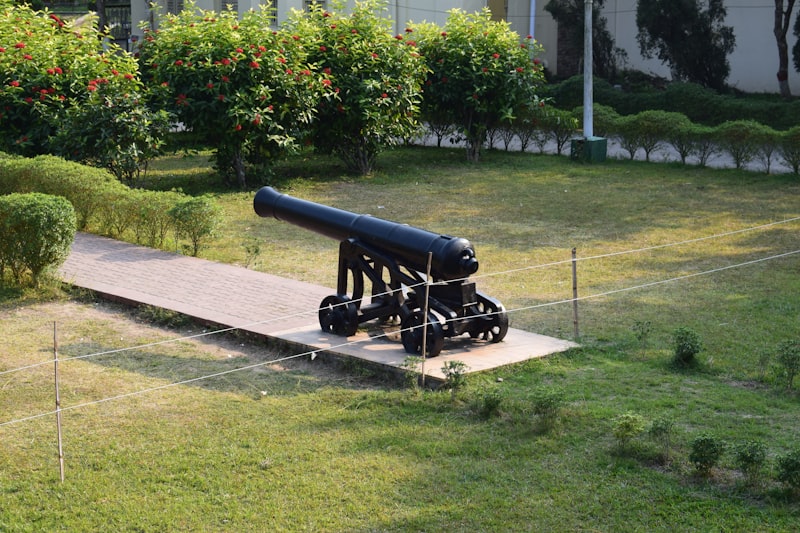
Historic cannon on wooden platform
Perry's foundry cast cannons for the Continental Army

By 1771 the foundry was owned by Zephaniah Keith. In 1773, a man named James Perry bought a one-fourth share and soon purchased the entire works. When revolution came, Perry turned his operation into an arsenal. His workers poured cannons, cannonballs weighing up to 36 pounds, and clouds of grapeshot for the Continental Army. The small guns (2.91-caliber pieces firing three-pound balls) earned a nickname in the Continental Army: “Grasshoppers.”

The new cannons were proofed by firing them north over Old Pond into a stone embankment (the marks are still visible in the woods today). Local legend, bolstered by accounts in the Easton Historical Society, holds that George Washington spent at least two nights in Easton, one at the Kingman Tavern on Rockland Street and another at the Benjamin Williams Tavern on Bay Road, negotiating for cannon and shot. That tavern still stands, with a 1773 milestone inscribed “B.W.” still standing in the front yard. In 1778, Perry hired soldiers from Norton and Easton out of his own pocket to serve in the Continental Army. By 1784, the town owed him 557 pounds, 13 shillings, and 13 pence, a debt no records indicate was ever repaid.

The war took Perry's furnace (destroyed by fire in 1783) and the post-war depression and cheap Russian iron imports kept him from rebuilding. In 1787, Perry was arrested while travelling by sleigh toward the rebellion with his cannon patterns. Military authorities called him “the most dangerous man in Massachusetts”, not for his politics, but because he knew how to make cannons. The Easton Selectmen petitioned the Governor's Council repeatedly for his release, asserting Perry's complete innocence. After considerable delay he was discharged; no formal charges were ever brought.

Through it all, the charcoal shed stood by the pond, feeding the furnace that fed the revolution.

“The most dangerous man in Massachusetts”, not for his politics, but for his knowledge of cannon-making.

Military correspondence regarding James Perry, 1787, as cited in Easton Historical Society, Furnace Village (1993)
36 lb
Heaviest Cannonball Cast
£557
Town Debt to Perry
1783
Furnace Destroyed
1835

School, Chapel
& Library

Interior of Harmony Hall during its chapel years, wooden pews, a pulpit, and original hanging oil lamps
Inside Harmony Hall as a chapel: pews, pulpit, and the original hanging oil lamps

Sometime between 1835 and 1846, the charcoal bins were finally swept clean. Workers fitted the old shed with desks and benches, and the building that once stored fuel for an iron furnace was given a purpose that would have been unimaginable to the men who built it: it became a schoolhouse, one of just three locations serving as Easton's town high school. Private grammar schools used the building too, and remarkably, the last of the initial four terms of Easton's High School was still being taught within these walls as late as 1868.

Children of furnace workers and farmers gathered in this same building where charcoal dust still clung to the rafters. When the new District Schoolhouse No. 11 was erected at 8 South Street in 1855, the day school students moved on, but the building wasn't done teaching.

In 1877, a man named Andrew Hamilton organized a Sunday school here with 60 members. Someone filled the shelves with nearly fifty volumes, creating a lending library decades before the Ames family built the famous H.H. Richardson-designed one that still stands in North Easton. For many years, church services and evening prayer meetings were also held in the Hall. In a village where most households owned a Bible and little else, this was a small revolution of its own.

1868
Last High School Term Here
60
Sunday School Members
~50
Volumes in Lending Library
1860

Drake’s Hall &
the Brass Band

When General Shepard Leach died in 1832 (thrown from his chaise, reputed to be the wealthiest man in town) his brother-in-law Lincoln Drake and the Drake sons inherited the foundry and with it, the building by the pond. Under the Drakes, it gained a new identity and, finally, a name. Tax records from 1860 and 1861 show Captain Lincoln Drake assessed for “one Harmony Hall.”

Before it was Harmony Hall, people called it Drake's Hall. The Easton Brass Band, founded in 1841, used the building as their rehearsal space, described in one account as “a cold, dingy barn where pigeons overhead interfered.” A bandstand was later built nearer the street. This musical connection may be how the name “Harmony” stuck. The band played on until about 1878.

The band rehearsed in a building that had been a charcoal shed and a schoolhouse, not an ideal concert venue, but it was accessible to the working families of Furnace Village who made up its membership.

By the 1870s the school desks and benches were cleared out, a new floor was laid, and the Hall became the neighborhood's social center hosting Christmas festivities, catch-penny fairs, suppers, sings, and dancing parties. In 1905, the Harmony Grange was organized here, adding another civic use to the building’s history.

“Once called Drake's Hall, it was used by the Easton Brass Band, which gathered in a cold, dingy barn where pigeons overhead interfered.”

Enterprise News, 2009

Lincoln Drake died in 1872. His sons Lincoln Shepard Drake and Abbott L. Drake continued the foundry business, as shown on L.S. Drake's letterhead: “Iron Founder and Machinist.”view doc handwritten note By the 1890s, the Drake Foundry could no longer compete with foundries closer to raw materials. The foundry office was sold to the Swift brothers, who opened a general store that operated for 58 years.

One Building, Colorized

Drag to compare the original photograph with its colorized restoration.

Harmony Hall, colorized
Harmony Hall, original photograph
Colorized Original
1925

The Outlook Club

Bronze memorial plaque: In Memory of Helen L. Drake, 1862 to 1919, Founder of Outlook Club
The Helen Drake memorial plaque, still in the building today
The Norway Spruce planted by the Outlook Club in 1932 to mark the bicentennial of George Washington's birth, towering above the surrounding trees
The Norway Spruce, planted by the Outlook Club in 1932 for the bicentennial of Washington's birth. The only one of many planted that day across Easton still standing.

In January 1888, Helen L. Drake (1862 to 1919), granddaughter-in-law of Lincoln Drake himself, gathered four neighbors to read Shakespeare together. At first they called themselves “Our Myrtle Circle”, affectionately shortened by townspeople to the “Old Maid's Club.” The official name came in 1897: The Outlook Club. What began as a small reading circle for “Shakespeare and English history” grew into a long-running community organization that lasted over 80 years. During World War I, the women did Red Cross sewing. In 1922 they joined the General Federation of Women's Clubs, and their ambitions grew with them.

In 1925, the members voted to spend $450 to buy Harmony Hallview record outright. Chester L. Wills transferred the property at 8R Poquanticut Avenue to the club. Around the same time, the heirs of Abbot Lawrence Drake, grandson of the Lincoln Drake who once owned the foundry, conveyed the parcel of land between Harmony Hall and Old Pond. The women rolled up their sleeves and “renovated and remodeled it into a fine clubhouse.”

In 1932, to mark the bicentennial of George Washington's birth, they planted a Norway Spruce on the property, the only one of many planted that day across town that still stands. In 1936, they dedicated the Hall's first fireplace as a memorial to Helen L. Drake, the club's founder, linking the building back to the Drake family that had shaped it for generations. A bronze plaque bearing her name still hangs inside the building today. During World War II, they rolled bandages for the Red Cross inside the same walls. The Outlook Club became town-famous for their marvelous suppers.

For twenty years the women decorated the rooms with period antiques, braided rugs, and wallpaper, hosting dinners, card nights, and their famous Harmony Hall suppers. By the 1960s, the remaining members, now elderly, could no longer keep up the building. They invited the George Shepard Post #7 of the American Legion to share the Hall, and eventually transferred the title for $1.00. The Legion called Harmony Hall home from about 1980, hosting monthly dinners for 100 people and continuing the tradition of community suppers.

Now

Preservation
& Restoration

By 2000, the American Legion, struggling with upkeep costs, rented the Hall to the Easton Jaycees for $1 per year. The Jaycees launched an ambitious renovation, installing heating, making repairs, and planning to raise $25,000 to $35,000 to bring the old hall back to life. The Brockton Enterprise covered their effort view article, noting the 50-by-30-foot building still had its commercial kitchen, piano, fireplace, and original hanging oil lamps. When the Jaycee chapter dissolved in 2003, the building reverted to the Legion, who decided to sell in December 2004.

In August 2006, Robert and Joanne Carroll purchased the property from the Legion and placed it under a preservation restriction with the Easton Historical Commission. They embarked on a complete renovation, preserving the rare 13-foot barrel-vaulted ceiling, the original brick walls (found hidden behind sheet rock), and the building's historic facade. During construction, Robert unearthed 75-caliber iron balls in the dirt, grapeshot from the foundry era, confirming the building's direct connection to the Revolutionary War works. The restoration was completed in 2008. view article view blog post

Over 270 years, this single structure has served as a charcoal shed, a schoolhouse, a chapel, a brass band hall, a community center, a women’s club, a Legion post, and now a private residence, one of the longest continually-used buildings in Easton.

Three Centuries at One Address

Harmony Hall didn’t exist in isolation. It was part of a thriving industrial village that produced iron, cannons, shovels, and malleable castings for over 250 years. Explore the full timeline, with proportional spacing that shows just how much time passed between events.

Furnace Village & Harmony Hall
1715 to Present · Scroll to explore

← Drag or scroll to move through time →

1715 Present

Furnace Village Map

Harmony Hall
Historic Landmarks
Water Features
National Register
NRHP #83003938
Furnace Village Historic District listing on the National Park Service database. Listed October 6, 1983.
Ames Free Library
History of Iron Making in Furnace Village
Comprehensive account of the furnace's founding, Revolutionary War production, and the Drake and Belcher eras.
Easton Historical Society
Furnace Village (1993), PDF
Detailed 8-page history of Furnace Village including Harmony Hall's origins, the Outlook Club, and the Belcher foundry. The richest single source.
Easton Historical Society
Poquanticut (1993), PDF
16-page history of the Poquanticut neighborhood: Wampanoag origins, early settlers, witchcraft folklore, the gang of thieves, Oakes & Blanche Ames at Borderland.
EHS Newsletter
“Can You Speak Algonquin?” (Fall 2015)
Translations of Wampanoag place names in Easton: Poquanticut, Queset, Massapoag and more. Based on Dr. Frank Waabu O’Brien’s Understanding Indian Place Names in Southern New England (2010).
Ames Free Library
History of Easton, Massachusetts
Easton Historical Society overview (2004) covering settlement, iron heritage, Revolutionary War, and the Ames family’s transformation of the town.
Newspaper
Sunday Enterprise, Oct. 30, 1988
Bob Cubie, “Post 7 brings fresh outlook to historic meeting place.” Two-page feature on the American Legion renovation with extensive history of the Hall. View scanned pages below ↓
Newspaper
Easton Journal / Wicked Local, 2005 & 2008
Josh Press, “Historic Harmony Hall up for sale” (2005) and Paula Vogler, “Historic building gets facelift” (2008). View scanned pages below ↓
Magazine
SoCo Magazine, December 2008
Advertorial feature on Harmony Hall as a historic waterfront property, detailing the 2008 renovation and barrel-vaulted ceiling. View scan below ↓
Blog
Historic House Blog, March 2009
“Listing of the Week: 1752 Harmony Hall in Easton Massachusetts.” Details the Carroll renovation, barrel ceilings, and 75-caliber iron balls found on site. View scan below ↓
Primary Document
Outlook Club Property Deed
Transfer document from the Outlook Club of Easton, Inc. to George S. Shepard Post #7 of the American Legion, referencing the 1925 Chester L. Wills survey and Drake deeds. View scan below ↓

Additional Research & Online Resources

External websites consulted during research for this site.

MACRIS
Massachusetts Cultural Resource Information System
State database of historic properties, including the Furnace Village Historic District inventory forms.
Town of Easton
Town of Easton, Massachusetts
Official town website with historical commission records and local government information.
Historical Society
Easton Historical Society
Local historical society with publications on Furnace Village, the Drake family, and Easton's industrial heritage.
HMDB
Historical Marker Database
Database of historical markers and monuments, including entries for Easton and Furnace Village.
Wicked Local
Easton Journal / Wicked Local
Local news coverage of Easton including the 2005 and 2008 articles on Harmony Hall's sale and renovation.
Enterprise News
Brockton Enterprise
Regional newspaper. Source of the 1988 Harmony Hall feature and 2001 Jaycees renovation coverage.
Living Places
LivingPlaces.com
National Register historic district listings and property research.
Internet Archive
Archive.org / Wayback Machine
Used to access archived versions of local history pages and historical blog posts that are no longer live.
HathiTrust
HathiTrust Digital Library
Digitized historical books and records, including early Easton town histories and Massachusetts industrial surveys.

Primary Sources

Photos, scanned newspaper articles, handwritten notes, legal records, and research documents. Click any image to view full size.

Photos

Documents